



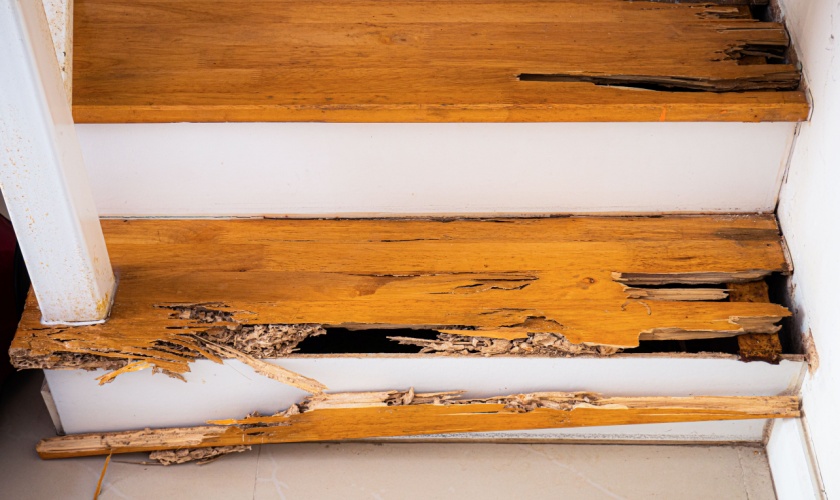
Termites cause billions of dollars in property damage across the United States every year, and Raleigh’s warm, humid climate makes our area particularly vulnerable to these destructive pests. The challenge with termites is that they often work silently behind walls, under floors, and in other hidden areas where damage accumulates long before homeowners realize there’s a problem. Knowing the warning signs of termite activity can help you catch an infestation early, potentially saving you thousands in repair costs.
1. Mud Tubes on Foundation Walls
Subterranean termites – the most common type in North Carolina – build mud tubes to travel between their underground colonies and the wood they’re feeding on in your home. These tubes are about the width of a pencil and appear as raised, dirt-colored lines running along your foundation walls, floor joists, or other surfaces.
Check the exterior of your foundation, especially in areas where the soil meets your home’s structure. Also inspect your crawl space, basement walls, and any wooden structures near ground level. If you find mud tubes, you almost certainly have an active termite infestation.
2. Discarded Wings Near Windows and Doors
In spring, mature termite colonies produce swarmers – winged termites that fly out to start new colonies. After swarming, these termites shed their wings, often leaving small piles of discarded wings near windowsills, door frames, or other entry points.
Finding discarded wings is a strong indicator that termites have either entered your home or are establishing a colony nearby. Even if you don’t see the termites themselves, those wings are a red flag that warrants immediate professional inspection.
3. Hollow-Sounding Wood
Termites eat wood from the inside out, leaving only a thin outer shell. If you tap on wooden surfaces in your home and they sound hollow rather than solid, termites may have already consumed the interior. Pay attention to baseboards, door frames, window sills, and wooden support beams.
You might also notice that wood feels softer than it should or gives slightly when you press on it. This is another sign that termites have compromised the wood’s structural integrity.
4. Visible Damage to Wood Surfaces
Advanced termite damage becomes visible on wood surfaces. You might see small holes in woodwork, blistering or darkening of wood surfaces, or wood that looks like it has water damage even when there’s no moisture source nearby.
Termite-damaged wood often has a honeycomb pattern inside if you can see the interior. Wooden structures may also become warped or sagging as termites destroy the material that’s supposed to provide support.
5. Frass (Termite Droppings)
Drywood termites – less common in Raleigh but still present – push their droppings out of small holes in the wood they’re infesting. These droppings, called frass, look like small piles of sawdust or coffee grounds and typically accumulate near damaged wood or on the floor below infested areas.
If you notice these small pellet-like droppings, especially near wooden furniture, attic beams, or structural wood, you may have a drywood termite problem.
6. Tight-Fitting Doors and Warped Windows
When termites damage wood around door frames and window casings, those doors and windows may become difficult to open or close. This happens because termite activity and the moisture they introduce cause wood to swell and warp.
While seasonal humidity changes can also affect doors and windows, persistent sticking combined with other warning signs suggests termite damage rather than normal expansion and contraction.
7. Bubbling or Peeling Paint
Paint that bubbles, cracks, or peels away from wood surfaces might indicate termite activity beneath. Termites tunneling through wood can create moisture that causes paint to blister and peel. This damage often resembles water damage, but if there’s no obvious water source, termites could be the culprit.
8. Sagging Floors or Ceilings
Severe termite damage to floor joists or ceiling supports can cause noticeable sagging. Floors might feel spongy when you walk across them, or you might see visible dips in ceilings. This level of damage indicates a significant, long-term infestation that requires immediate attention.
9. Clicking Sounds in Walls
Soldier termites bang their heads against wood to signal danger to the colony, creating faint clicking or tapping sounds. Worker termites are also noisy eaters. While these sounds are subtle, you might hear them if you press your ear against a wall in a quiet room, especially at night when they’re most active.
10. Live Termites or Swarmers
Obviously, seeing live termites is the most definitive sign of an infestation. You might spot worker termites – small, pale, ant-like insects – if you disturb infested wood or find them in your crawl space. Swarmers look like flying ants but have straight antennae and two pairs of equal-sized wings.
Don’t Wait to Take Action
If you’ve noticed any of these warning signs, time is critical. Termites don’t take breaks, and every day of delay means more damage to your home. A professional termite inspection can confirm whether you have an infestation and determine its extent. AAA Exterminating has protected Raleigh homes from termites for over 50 years with proven treatment methods and ongoing prevention strategies. Schedule your termite inspection today to protect your home and your investment.
