



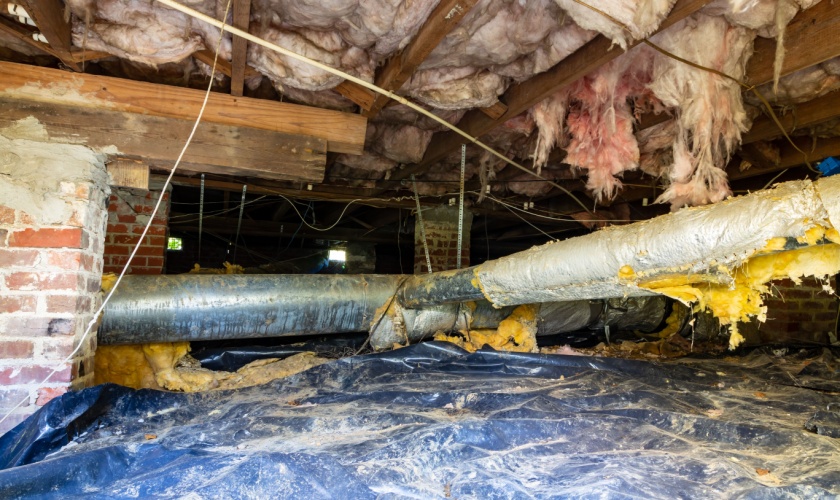
Crawl space moisture isn’t just a minor maintenance issue – it’s a serious problem that can compromise your home’s structural integrity, indoor air quality, and overall value. Raleigh’s humid climate creates ideal conditions for moisture accumulation beneath homes, and what starts as a small amount of dampness can quickly escalate into major damage. Understanding why crawl space moisture poses such a significant threat helps homeowners take proactive steps before problems spiral out of control.
Structural Damage to Your Home’s Foundation
Wood is the primary structural material in most crawl spaces, supporting your home’s floors and walls through joists, beams, and subflooring. When moisture levels rise, wood begins to rot and lose its structural capacity. What was once a solid support beam becomes soft, weak, and unable to bear the weight it was designed to carry.
This deterioration happens gradually, which is why many homeowners don’t realize there’s a problem until they notice sagging floors or doors that won’t close properly. By that point, the damage may require extensive – and expensive – repairs. In extreme cases, moisture-damaged support structures can compromise your home’s foundation, leading to settlement issues that affect the entire building.
Wood rot also attracts wood-destroying insects like termites and carpenter ants. These pests specifically seek out damp wood because it’s easier to chew through and provides the moisture they need to survive. Once they establish colonies in your crawl space, they can cause additional structural damage on top of what the moisture has already done.
Health Risks from Mold and Poor Air Quality
Mold thrives in damp, dark environments, making moisture-laden crawl spaces the perfect breeding ground. Once mold takes hold, it releases spores into the air that can circulate throughout your home via the “stack effect” – the natural upward movement of air from lower to upper levels.
These airborne spores trigger allergic reactions, respiratory problems, and asthma attacks, particularly in children, elderly family members, and anyone with compromised immune systems. Even if you’re not noticing visible mold growth inside your living areas, spores from your crawl space can still affect indoor air quality and cause health issues.
Beyond mold, the musty odors associated with crawl space moisture indicate the presence of bacteria and decomposing organic matter. Breathing this contaminated air day after day can lead to chronic respiratory irritation and other health problems.
Pest Infestations
Moisture creates an inviting environment for all kinds of unwanted pests. Termites need moisture to survive and specifically target damp wood, making your moisture-damaged crawl space an ideal habitat. Carpenter ants, powder post beetles, and other wood-destroying insects also prefer moist conditions.
Rodents like rats and mice seek out crawl spaces with high humidity because they offer both shelter and water sources. Once pests establish themselves in your crawl space, they can move into your walls and living areas, creating secondary problems that require professional extermination services.
Reduced Energy Efficiency and Higher Utility Bills
Insulation installed in your crawl space is designed to help regulate your home’s temperature and improve energy efficiency. When moisture saturates insulation, it loses its insulating properties and becomes a soggy, ineffective mess. Wet insulation can also become heavy enough to sag and pull away from floor joists, leaving gaps that allow conditioned air to escape.
Your HVAC system has to work overtime to compensate for this energy loss, running longer cycles to maintain comfortable temperatures. This translates directly to higher heating and cooling bills. Over time, the constant strain can also shorten your HVAC system’s lifespan, leading to premature replacement costs.
Decreased Home Value
If you’re planning to sell your home, crawl space moisture problems can significantly impact your property’s value. Home inspectors routinely check crawl spaces during pre-sale inspections, and moisture issues raise red flags for potential buyers. Many lenders won’t approve mortgages for homes with active moisture problems or structural damage from water infiltration.
Even if you disclose the issue and price your home accordingly, buyers may negotiate aggressively or walk away entirely rather than take on the liability of fixing crawl space problems.
Taking Action to Protect Your Raleigh Home
The good news is that crawl space moisture problems can be effectively treated and prevented. Professional moisture control services identify the source of water infiltration, implement solutions like vapor barriers and dehumidification systems, and repair existing damage before it worsens. Don’t wait until moisture problems become structural nightmares. Reach out to AAA Exterminating today for a thorough crawl space evaluation and customized moisture control solutions that protect your Raleigh home for years to come.
