



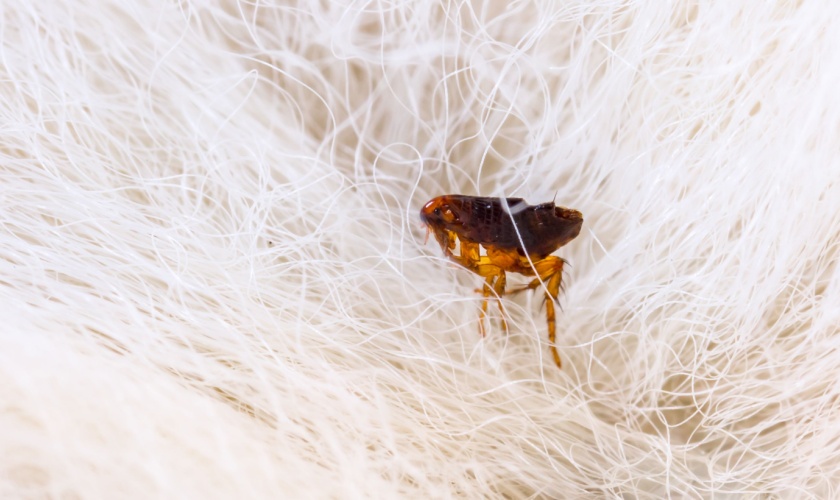
Fleas and ticks are a year-round concern for Raleigh pet owners, and they affect far more than your animals. North Carolina’s mild winters and warm, humid summers give these parasites a long active season, and once they establish themselves in a yard or home, they are difficult to remove without a plan. Our flea and tick control service is built around the way these pests live and breed.
Why Fleas and Ticks Are a Bigger Problem Here
The same climate that keeps other pests active also suits fleas and ticks. Fleas reproduce rapidly indoors and out, and a few hitchhikers on a pet can become a household infestation within weeks. Ticks wait in tall grass, leaf litter, and shaded, moist areas at the edges of yards, then attach to whatever passes by. Both feed on pets and people alike, so an untreated yard puts the whole household at risk.
The health risks are real. Fleas cause constant itching and can trigger allergic skin reactions in pets, and they can pass tapeworms to an animal that swallows one while grooming. A heavy flea infestation can even cause anemia in small or young animals. Ticks in our region can carry illnesses such as Lyme disease and Rocky Mountain spotted fever, which affect people as much as animals, and a tick can stay attached and feeding for days before anyone notices. Catching an infestation early protects everyone under your roof.
How These Pests Get Onto Your Property
Wildlife and rodents are a common source. Deer, rabbits, opossums, stray cats, and rodents all carry fleas and ticks into yards, dropping eggs and adults as they pass through. A rodent problem can quietly seed a flea problem, which is one reason our rodent control work and flea control often go hand in hand. Once the pests are in the yard, pets carry them indoors, where fleas continue their life cycle in carpet, bedding, and upholstered furniture.
What It Takes to Control Them
Effective control treats the yard and the home, not just the pet. We identify where fleas and ticks are living and breeding, then treat those areas and time follow-up to interrupt the life cycle, since eggs and pupae can survive an initial treatment. A few habits make professional treatment last longer:
- Keep grass cut short and trim shrubs to reduce the shaded, humid spots ticks prefer.
- Clear leaf litter, brush, and debris from the edges of the yard.
- Reduce what attracts wildlife and rodents near the home, such as open food sources and dense ground cover.
- Work with your veterinarian on a preventive product for your pets.
Pets are part of the family, and protecting them from fleas and ticks protects everyone in the home. Treating the animal alone leaves the yard and house as a reservoir that puts pets right back at risk, which is why a property-wide approach works better. To get started with a plan suited to your home, contact us and we will assess the situation and recommend the right treatment.
