



Most homeowners rarely venture into their crawl spaces, which means moisture problems often go undetected until significant damage has occurred. Recognizing the warning signs of high moisture early can help you avoid costly repairs and protect your home’s structural integrity. Whether you’re dealing with a musty smell indoors or noticing unexplained increases in your energy bills, understanding the symptoms of crawl space moisture issues is the first step toward solving the problem.
Musty Odors Throughout Your Home
One of the most common indicators of crawl space moisture is a persistent musty or earthy smell in your living areas. This odor comes from mold, mildew, and decomposing organic matter thriving in the damp environment below your floors. Because warm air naturally rises, moisture and mold spores from your crawl space can travel up through floorboards and into your home.
The smell might be strongest in certain rooms, particularly those directly above the crawl space. You might notice it more during humid weather or when your HVAC system is running, as air circulation pulls moisture and odors from below and distributes them throughout your house.
Visible Signs of Water Damage
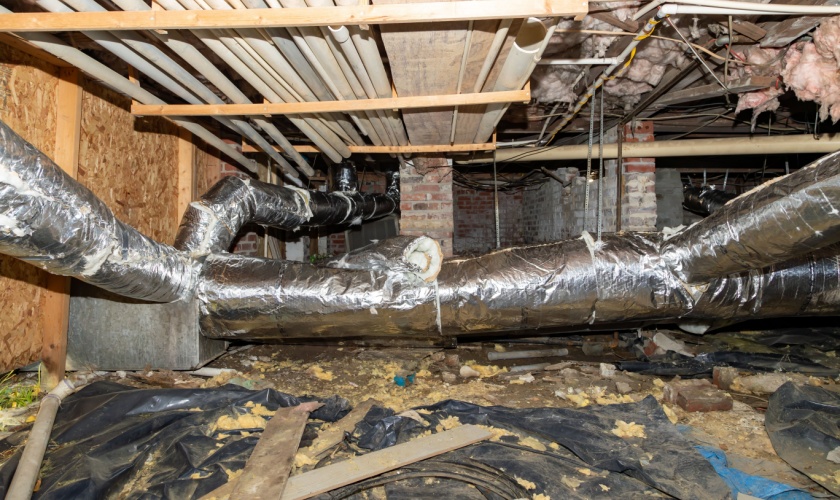
If you do decide to inspect your crawl space, look for obvious signs of moisture problems. Standing water or puddles on the crawl space floor indicate poor drainage or groundwater seepage. You might also see condensation forming on pipes, ductwork, or even the crawl space ceiling (your floor joists).
Check wooden beams and supports for discoloration, soft spots, or visible rot. Wood that’s been exposed to prolonged moisture becomes darker, spongy to the touch, and may even crumble when pressed. Look for white, fuzzy mold growth on surfaces or dark staining on foundation walls that suggests water infiltration.
Changes in Your Floors
High moisture in your crawl space doesn’t stay contained – it affects the floors above. You might notice floorboards that feel soft, spongy, or bouncy when you walk across them. Hardwood floors may start to warp, cup, or buckle. Tiles might crack or become loose as the substrate beneath them deteriorates from moisture damage.
In severe cases, you’ll see visible sagging in floors or notice that doors no longer close properly because the door frames have shifted due to foundation movement caused by moisture-related wood rot.
Increased Humidity Indoors
Crawl space moisture doesn’t stay confined below your home. It can significantly increase humidity levels throughout your living areas. If your indoor humidity consistently reads above 60 percent on a hygrometer, or if you notice condensation forming on windows even when it’s not particularly humid outside, your crawl space might be the culprit.
High indoor humidity creates a clammy feeling in your home and can cause allergies to flare up. You might also notice that your air conditioning system runs more frequently as it struggles to control both temperature and excess humidity.
Pest Activity
Moisture attracts pests. If you’ve noticed an increase in termites, carpenter ants, silverfish, or other moisture-loving insects, your crawl space conditions might be drawing them in. Rodents also prefer damp environments for nesting. An uptick in pest activity – especially wood-destroying insects – often correlates with moisture problems beneath your home.
Higher Energy Bills
When your crawl space is excessively damp, it affects your home’s energy efficiency. Wet insulation loses its R-value and becomes ineffective, forcing your HVAC system to work harder to maintain comfortable temperatures. If you’ve noticed your heating or cooling bills climbing without an obvious explanation, crawl space moisture could be the hidden cause.
What to Do If You Spot These Signs
If you’ve identified any of these warning signs, don’t ignore them. Crawl space moisture problems worsen over time and lead to increasingly expensive repairs. A professional inspection can determine the extent of the damage and identify the moisture source – whether it’s groundwater seepage, condensation, plumbing leaks, or poor ventilation. Early detection and treatment protect your investment and your family’s health. Contact AAA Exterminating to schedule a comprehensive crawl space inspection and get expert recommendations for moisture control solutions tailored to your Raleigh home.
